
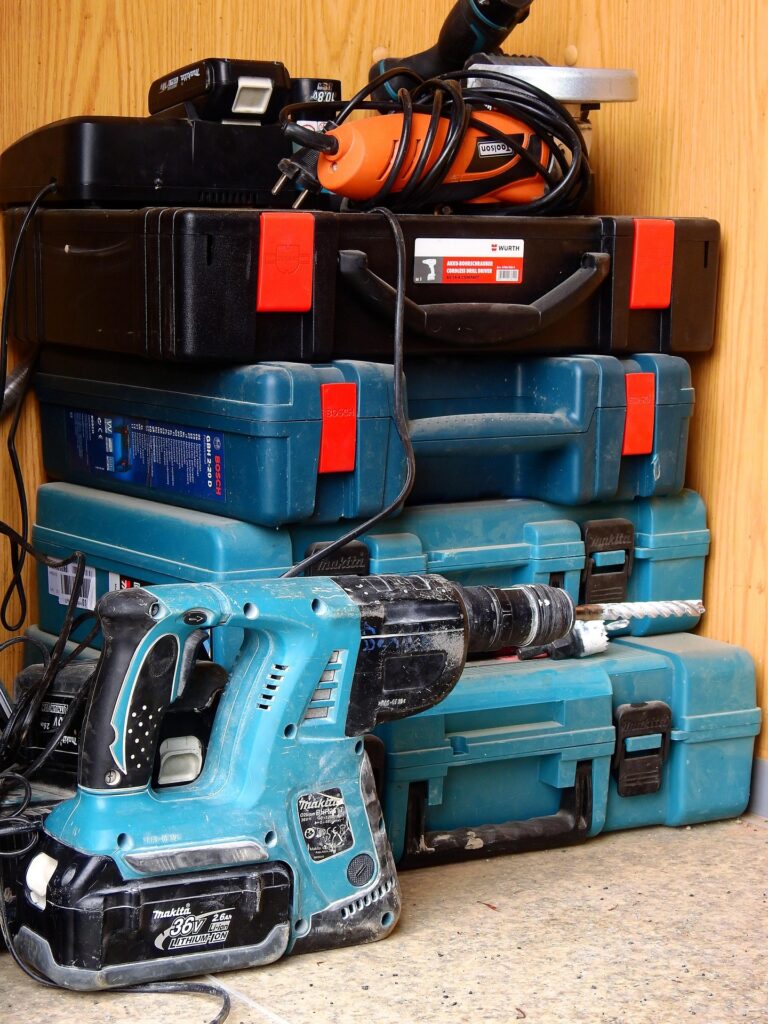
“Power tools” covers a lot of ground — everything from a $30 drill you’ll use twice a year to a $400 impact driver a framing contractor runs eight hours a day. Before you buy anything, it’s worth understanding two things: how to use whatever you buy safely, and whether you actually need DIY-grade or professional-grade equipment, since the difference affects both price and how long the tool will last under real use.
Below we cover the safety basics that apply to any power tool, then break down what separates a homeowner-grade tool from a contractor-grade one. If you already know which tier you’re shopping in, jump straight to our DIY power tools picks or our professional power tools picks.
Table of Contents
Power Tool Safety Basics.
Most power tool injuries come from a handful of preventable habits, not equipment failure. A few rules worth following regardless of what tool you’re using or how experienced you are:
- Wear the right protective gear. Safety glasses for anything that cuts, sands, or grinds; hearing protection for anything loud enough to make conversation hard; gloves where the tool calls for them (skip gloves around anything with a spinning bit or blade that could catch fabric).
- Skip the loose clothing and jewelry. Ties, dangling sleeves, and rings can catch in moving parts — this is one of the more common ways minor tool contact turns into a serious injury.
- Never remove or bypass a guard. Blade guards and safety switches exist because the tool is genuinely hazardous without them, not as a suggestion.
- Disconnect the tool before servicing it. Unplug it, or pull the battery, before changing a blade, bit, or accessory, and before any cleaning or maintenance.
- Secure your workpiece. Clamp it down or use a vise so both hands are free to control the tool — trying to hold the work and the tool at the same time is how a lot of avoidable accidents happen.
- Don’t carry a tool with your finger on the trigger. Whether it’s plugged in or has a battery loaded, keep your finger off the switch until the tool is in position and you’re ready to use it.
- Take damaged tools out of service. A cracked housing, frayed cord, or bit that won’t seat properly is a reason to stop using the tool, not push through the job.
- Keep bystanders clear. Anyone not directly involved in the work should stay a safe distance back, especially with anything that throws debris.
- For the full technical breakdown, OSHA’s hand and power tools hazards and solutions guide covers the standards these practices are based on.
DIY vs. Professional-Grade Power Tools
The biggest practical difference between a homeowner-grade tool and a professional-grade one is duty cycle — how much continuous work the tool is actually built to handle. A DIY tool is designed for occasional, intermittent use: a few projects a month, with breaks in between. Push it into all-day, every-day use and it will run hotter, wear out faster, and eventually fail well before a professional-grade equivalent would.
A few things tend to separate the two tiers:
- Motor type. Brushless motors are now standard on nearly every professional-tier cordless tool — they run cooler, deliver more torque for their size, and last longer since there are no brushes to wear out. DIY-tier tools more often use less expensive brushed motors, which is a reasonable tradeoff for occasional use but wears faster under sustained heavy work.
- Battery platform. Professional lines increasingly run on higher-voltage or higher-capacity battery platforms built for longer runtime under load. DIY-tier tools are usually fine on smaller, less expensive battery packs since they’re not running continuously.
- Warranty and build quality. Professional-grade tools often carry longer warranties or service agreements, reflecting more durable gearing, housings, and seals against dust and moisture.
- Price. DIY-tier tools and kits generally run affordable; professional-tier tools cost noticeably more per tool, which is the tradeoff for the extra durability and runtime.
If you’re doing occasional projects around the house, a DIY-tier tool is very likely enough — see our DIY power tools picks. If you’re running tools daily, working in demanding conditions, or just don’t want to think about replacing a tool in two years, professional-tier is worth the extra cost — see our professional power tools picks.
A Few Everyday Picks
Frequently Asked Questions
Do I need professional-grade tools for occasional home projects?
No — for occasional use (a project every few weeks, not every day), a DIY-tier tool is built for exactly that duty cycle and will hold up fine. Professional-grade tools earn their higher price back through daily, sustained use; if that’s not your situation, you’re paying for durability you won’t need.
What’s the difference between a brushed and brushless motor?
Brushless motors run cooler, last longer (no brushes to wear out and replace), and typically deliver more runtime per battery charge, but cost more upfront. Brushed motors are less expensive and perform fine for occasional use, but wear out faster under sustained heavy work.
Is it safe to use a power tool without safety glasses?
No — safety glasses should be worn any time you’re using a tool that cuts, sands, drills, or grinds, regardless of how quick or minor the job seems. Debris and dust are the most common cause of eye injuries with power tools, and they happen fast enough that reacting after the fact isn’t an option.
How do I know if a power tool is safe to keep using?
Stop using it if you notice a cracked or damaged housing, a frayed or damaged cord, a guard that doesn’t sit properly, or a bit/blade that won’t seat and lock correctly. Any of those is a reason to take the tool out of service rather than finish the job with it.