
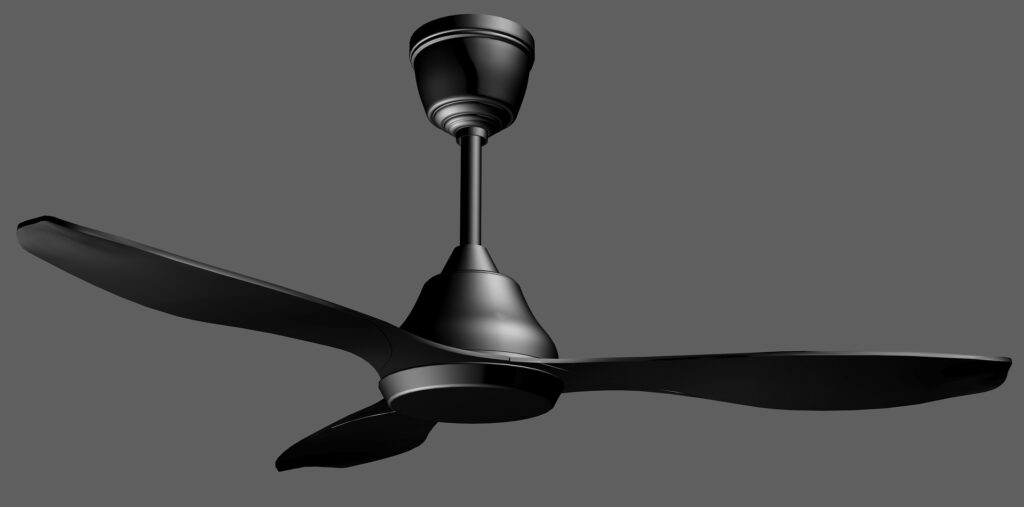
Ceiling fans do double duty as light fixtures and year-round climate helpers, cutting cooling costs in summer and helping redistribute warm air in winter. Most rooms with standard 8-foot ceilings do best with a low profile (flush mount) fan that sits close to the ceiling, while larger rooms need more blade span and airflow. Below we’ve rounded up low profile fans with remote and app control, a large-room option built for great rooms, and a budget pull-chain pick — all with integrated LED lighting.
Showing all 5 results
- Sale!
 Ceiling Fans
addlon 42 Inch Black Low Profile Ceiling Fans with Lights and Remote
Original price was: $53.99.$48.59Current price is: $48.59. Shop on Amazon - Sale!Ceiling Fans
hykolity 72 Inch Modern Flush Mount Large Nickel Ceiling Fan with Light
Original price was: $179.99.$139.99Current price is: $139.99. Shop on Amazon


Table of Contents
How to Choose the Right Ceiling Fan
Low Profile vs. Standard Ceiling Fans
Low profile (flush mount) ceiling fans mount tight against the ceiling, making them the right call for rooms with 8-foot ceilings or lower — most bedrooms, living rooms, and hallways. Standard fans hang from a downrod instead, positioning the blades 8-9 feet above the floor and roughly 10-12 inches below the ceiling for the best airflow, which works better in rooms with 9-foot-plus ceilings. Both addlon fans and the Prominence Home Whitley below are low profile designs built for standard-height rooms.
Sizing Your Fan to the Room
Match blade span to square footage: rooms up to 75 sq ft usually need a 29-36 inch fan, 76-144 sq ft calls for 36-42 inches, and 144-225 sq ft (a typical living room) does best with a 44-50 inch fan. For great rooms and large open spaces over 225 sq ft, look for a 52-72 inch fan — the 72-inch hykolity below is sized specifically for these larger rooms. For more on airflow and CFM ratings, see this ceiling fan buying guide.
Remote, App, and Pull-Chain Control
If you want to adjust speed, light brightness, or color temperature without reaching for a switch, look for a remote or app-controlled fan — both addlon models below include this, and one adds full app and RGB control. If you’d rather keep things simple and save a few dollars, the Prominence Home Whitley’s pull-chain controls are a reliable, no-frills option.
Choosing a Fan for a Large Room or Great Room
Standard 42-52 inch fans move plenty of air in a bedroom or den, but a great room, open-concept living area, or large primary bedroom needs more blade span and higher CFM output to circulate air effectively. The 72-inch hykolity flush mount below is built for exactly this — large rooms up to roughly 450+ square feet.
Summer and Winter Rotation Direction
Most ceiling fans, including every option below, include a reverse switch on the fan, remote, or app. Run your fan counterclockwise in summer so it pushes air straight down, creating a wind-chill effect that lets you raise the thermostat a few degrees. In winter, switch to clockwise at a low speed — this pulls cool air up and pushes the warm air that collects near the ceiling back down along the walls.
Frequently Asked Questions
How many blades does a ceiling fan need?
Blade count matters less than you’d think — a well-built 3-blade fan can move as much air as a 5-blade fan. Focus on the fan’s CFM rating and blade span for your room size rather than counting blades.
What size ceiling fan do I need for my room?
Measure your room’s square footage, then match it to blade span: under 75 sq ft needs 29-36 inches, 76-144 sq ft needs 36-42 inches, 144-225 sq ft needs 44-50 inches, and anything larger needs 52 inches or more.
What’s the difference between a low profile and a standard ceiling fan?
Low profile (flush mount) fans sit directly against the ceiling and suit rooms with 8-foot ceilings or lower. Standard fans hang from a downrod for better airflow in rooms with taller, 9-foot-plus ceilings.
Which direction should my ceiling fan turn in summer vs. winter?
Counterclockwise in summer, to push air down and create a cooling breeze. Clockwise at a low speed in winter, to pull cool air up and redistribute the warm air trapped near the ceiling.
Can I install a remote-controlled ceiling fan myself?
Yes — remote-controlled fans install the same way as a standard fixture, just with a receiver module built in that pairs with the included remote. No smart home hub is required, though you should always shut off power at the breaker before working on any fixture.
What’s a good ceiling fan option if I’m on a budget?
Pull-chain models without remote or app control, like the Prominence Home Whitley below, typically cost less than remote-equipped fans while still covering a standard-size room.
Looking for something different? Browse our ceiling lights if you want a fixture focused purely on brightness, or check out our chandeliers for a statement centerpiece instead of a fan.